Friday, 27 May 2016

Traditional event of May


Résultat de recherche d'images pour "branche d'arbre fleurie"We are still in May and in some french villages, there is a traditional event which happens at the beginning of this month and at the end of this one. On May 1st, at night, young men bring  some branches of tree to young ladies aged of 18. They hangs up over the top of the main door at their house or on the wall. They choose the type of the tree according to the degree of  the relationship with the girl.


Résultat de recherche d'images pour "tradition les mais"

 This night, inhabitants haven't to let their stuff outside: bins, bunches of flowers... Because young men would take away them and put them on the village square. It sure that those men enjoys.


At the end of June, they are invited to have a drink to young women's house. That is happened when my parents were young. It was in the sixties.This tradition started in the 19th century. Nowadays, some villages try to keep this event ( Village of Alsace, for example).

If the tradition is still actually, it is not utterly applied but the gist remains. They simplifies things. Some villages have their own style. For example, in my village, when I was teenager, they just hang a branch of tree and they choose only one type of tree and don't worry about the signification of the tree. Now, they only hang a branch of a tree on the balcony of the town hall. At the end of may, nobody offer them a drink. In other village, young ladies and gentlemen have a drink together.


Nowadays, the tradition is less and less popular. Young people have other points of interest: going to the disco, to the cinema, to the restaurant, traveling... It is easier to move from the village to cities which provides more and more attractions, so that cities make our youth generation forget this tradition.

Trees symbol

Résultat de recherche d'images pour "églantier"Rosehip: big love
Hornbean: loveliness
Alder: l'aulne
Fir: frivolity or vainglory
Beech: the deepest love
Elderberries: inconstancy
Cherry tree: frivolity


*http://www.lesbridgets.com/index.php/Histoire/Les-mais-une-tradition-pour-les-celibataires-dans-la-nuit-du-30-avril-au-1er-mai.html

Sunday, 28 February 2016

Doing activities


Résultat de recherche d'images pour "activité sportive"


To express the fact that you practise activities, you employ mainly " faire" (to do) and "jouer" (to play for sport or games activities). If you use the verb "faire" in this case, the structure of the sentence is:

Subject  + faire + de la + activity (it can be sport or craft....)
Subject  + faire + du (contraction of de la) + activity.
Je fais de la gymnastique.
Je fais du football.

Do you know how to conjugate faire ?

Je fais
Tu fais
Il / Elle fait
Nous faisons
Vous faites or vous faisez
Ils / Elles font

And the verb jouer?

Sometimes, you can use another verb to say that you practice a sport or an hobby like scrap, it is the verb "jouer":

The structure is a little bit different:

Tom joue à la balle
Tom joue au badminton

Have you noticed anything ?

Subject + jouer + à la + activity                                 Il joue au ballon (he is playing at the balloon)
Subject + jouer + au (contraction of à le) +activity      Nous jouons à la marelle (we are playing at the                                                                                             hopscotch)

Here, we use à + an article or a contracted proposition au (à le).

BUT if you play with an musical instrument you use de la or du.

Je joue de la harpe. I play harp.
Je joue du piano. I play piano.

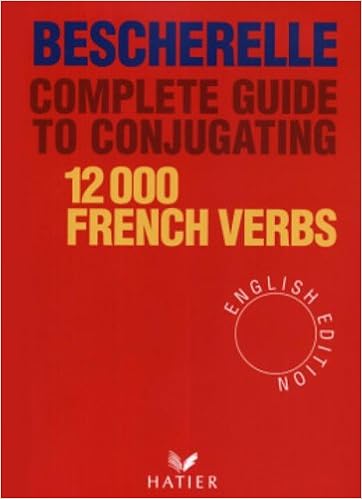
French conjugation sometimes can be complex and it could be very useful to have a guide to remind how verb is conjugated. For almost French household, they have this book called Becherelle. It is very helpful.


Tuesday, 9 February 2016

How to introduce oneself


In a social life, knowing the persons who you interact is important. The first things that you should know about them and they should know about you, are the main the name and more for some situations given (age, job, nationality, marital status...) There is a noun for that: INTRODUCTION - LA PRESENTATION.

You want to say your name:
a) Je m'appelle Pierre. My name is Pierre.
b) Mon prénom est Carole. My first name is Carole 
c) Mon nom est DUBOIS. My surname is DUBOIS.
For the cases b and c it is for formal situation, for example when you are in an office or to register yourself.

How to ask:
Comment t'appelles-tu ? Comment vous appelez-vous ? What's your name?
Quel est ton prénom ? Quel est votre prénom ? What is your first name?
Quel est ton nom ? Quel est votre prénom ? What is your surname?

You want to say your age:           
J'ai 25 ans. I am 25 years old.
Here you employ the verb avoir.

How to ask:
Quel âge as-tu ? How old are you?
Quel est ton âge ? What is your age?
Two ways to ask the age of someone. For the first question, you need to employ "avoir".

You want to say your job:
Je suis maçon. I am a builder.
Je travaille en tant qu'infirmière-chef. I work as a head nurse.

How to ask:

Que fais-tu dans la vie? or que faites-vous dans la vie ?
Quel est ton métier ? or quel est votre métier ? What is your job?
Quelle est ta profession? Or quelle est votre profession? What is your profession?

You want to say your marital status:
Je suis célibataire. I am single.
Je suis marié(e). I am married.
Je suis en couple or je vis en couple. I am in a relationship.
Je suis séparé(e). I am separeted.
Je suis divorcé(e). I am divorced.
Je suis veuf(ve). I am a widower (widow).

How to ask:

Quelle est votre situation matrimoniale? What is your marital status?

You want to say your nationality:
Je suis français. I am French.
Je suis de nationalité française. I have the French nationality.

How to ask:
Quelle est ta/votre nationalité ? What is your nationality? 

You want to say where you come from:
From a country: je viens de Belgique. I come from Belgium.
From a county: je viens de Franche-Comté. I come from Franche-Comté.
From a town: je viens de Paris. I come from Paris.

How to ask:
D'où viens-tu ? Or d'où venez vous ? Where do you come from?

You want to say where you live: 
J'habite à Lyon/ en Rhône-Alpes/ en France. I live in Lyon/ in Rhône-Alpes (it is the county of Lyon)/ in France.

How to ask:
D'où viens-tu ? D'où venez-vous ? Where do you come from?

Don't let your child forget French!

Your child was able to benefit from French lessons during the school year. You have seen his progress and he is very proud to know the basic...